The Algorithmic Legislature: DAOs, Self-Amending Code, and the Dawn of 'Jurisprudence by Protocol'
Abstract
Decentralized Autonomous Organizations (DAOs) are evolving beyond digital curiosities into sophisticated, self-amending legal entities, fundamentally reshaping finance and governance. This report from Vetta Investments explores the emergence of 'Jurisprudence by Protocol,' where organizational rules are self-executing code on a blockchain, offering unprecedented transparency and agility. We delve into the technology, market implications, key players, and significant challenges, including regulatory uncertainty and governance risks. For investors, this paradigm shift presents opportunities in foundational blockchain infrastructure, governance tokens, and legal tech solutions bridging the gap between code and common law. The future points towards hybrid legal structures, widespread 'DAO-as-a-Service' platforms, and ultimately, the potential for algorithmic states, demanding a fresh perspective on investment and organizational design.
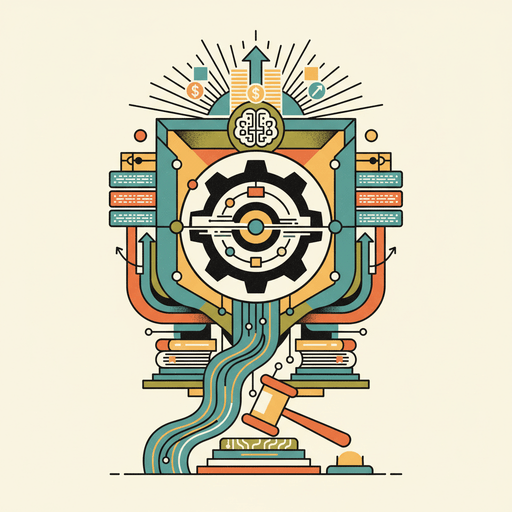
The Algorithmic Legislature: DAOs, Self-Amending Code, and the Dawn of 'Jurisprudence by Protocol'
What if the very rules governing an organization weren't etched in stone, nor debated in mahogany-paneled boardrooms, but rather lived and breathed as self-executing, self-amending code on a distributed ledger? This isn't the fever dream of a cyberpunk novelist, but the burgeoning reality of Decentralized Autonomous Organizations (DAOs), now evolving beyond mere digital clubs into sophisticated, self-governing entities that challenge the very foundations of traditional legal and financial structures. We're witnessing the genesis of a new legal philosophy, where 'code is law' isn't just a mantra, but an operational imperative, giving rise to what we at Vetta Investments are calling 'Jurisprudence by Protocol.'
Imagine a corporation where the bylaws update themselves, where shareholder votes are executed instantly and immutably, and where the very definition of 'corporate governance' is rewritten by algorithms rather than attorneys. This isn't merely automation; it's the architectural redesign of trust itself, moving from human intermediaries to cryptographic assurances. The implications for finance, law, and investment are not just significant; they are revolutionary, promising a future where organizational agility meets unprecedented transparency and resilience.
The Legal Vacuum and the Code-Driven Solution
For decades, the legal system has grappled with the slow, deliberate pace of human consensus, often struggling to keep pace with technological innovation. Traditional legal frameworks, designed for a physical world, are proving increasingly cumbersome for digital-native entities operating across borders. DAOs offer a tantalizing alternative: a legal operating system built for the internet age, where rules are executable and disputes are minimized by design.
This isn't to say traditional law becomes obsolete, but rather that a new layer of 'protocol law' emerges, governing the internal mechanics of these digital organisms. The interplay between these two layers—the slow, human-centric legal system and the fast, code-driven protocol system—is where the most fascinating and lucrative opportunities, as well as the most profound challenges, lie. We're talking about a paradigm shift, folks, not just a software update.
The Landscape: Where Code Meets Contract and Capital
The digital frontier is no longer just about information; it's about value, governance, and the very architecture of trust. We're observing a tectonic shift in how organizations are formed, funded, and function, driven by the relentless march of blockchain technology and cryptographic innovation. This isn't just about cryptocurrencies anymore; it's about the fundamental re-engineering of institutional trust.
Traditional corporations, with their hierarchical structures and often opaque decision-making processes, are beginning to look like relics from an industrial past. In contrast, DAOs offer a vision of hyper-transparent, community-governed entities, where every decision, every transaction, and every rule change is recorded on an immutable ledger. This transparency isn't a mere feature; it's the foundational bedrock of their operational integrity.
The Maturation of Decentralized Governance
Initially, DAOs were often dismissed as experimental curiosities, prone to governance hacks and meme-driven decision-making. However, the sector has matured dramatically, with over $20 billion in assets currently managed by DAOs, demonstrating a serious commitment to this new organizational paradigm. These aren't just speculative ventures; they are increasingly sophisticated financial protocols, investment funds, and even public goods initiatives.
The confluence of robust blockchain infrastructure, advanced smart contract capabilities, and a growing understanding of token economics has propelled DAOs into the mainstream of financial innovation. They represent a direct challenge to the centralized intermediaries that have long dominated finance, promising a future of disintermediated, permissionless, and programmatically enforced agreements. The old guard is watching, perhaps with a mixture of skepticism and growing unease.
The Technology Deep Dive: Architecting Autonomy with Code
At its core, a DAO is an organization whose rules are encoded as a computer program, transparent, controlled by its members, and not influenced by a central authority. These rules, written into smart contracts on a blockchain, dictate everything from treasury management to proposal voting, making the organization's operations entirely auditable and self-executing. It's like having a corporate charter that runs itself, with no need for human intervention to enforce its clauses.
The 'self-amending' aspect is where the true legal innovation lies. Unlike traditional legal documents that require slow, costly amendments through courts or legislative bodies, a DAO's foundational code can be updated through a pre-defined, on-chain governance process. This means the 'law' of the DAO can evolve dynamically, adapting to new circumstances or community consensus with unprecedented speed and efficiency. Think of it as a living constitution, constantly re-writing itself based on collective will.
Smart Contracts: The Digital DNA of DAOs
Smart contracts are the digital DNA of DAOs, self-executing agreements where the terms are directly written into lines of code. These contracts automatically execute and enforce the agreed-upon rules when specific conditions are met, eliminating the need for intermediaries and reducing the potential for human error or manipulation. They are the ultimate 'trust machine,' replacing lawyers with logic and escrow agents with algorithms.
Crucially, these contracts are deployed on a blockchain, making them immutable and transparent. Once deployed, they cannot be altered without following the DAO's pre-defined governance procedures, which typically involve token holders voting on proposed changes. This ensures that the 'code is law' principle is upheld, not by fiat, but by cryptographic consensus. It's a legal system without the judges, just the unyielding logic of the network.
Governance Mechanisms: The Digital Agora
DAO governance mechanisms are diverse, but generally revolve around token-based voting. Holding a certain number of governance tokens grants a member the right to propose and vote on changes to the DAO's protocol, treasury allocation, or strategic direction. This distributed decision-making process is designed to prevent single points of failure and promote collective ownership. It's democracy, but with a cryptographic twist.
Common governance models include direct democracy (one token, one vote), delegated democracy (where token holders elect representatives), and quadratic voting (which aims to reduce the influence of large token holders). The sophistication of these mechanisms is rapidly increasing, moving towards more nuanced and resilient systems that can handle complex proposals and prevent malicious actors. We're seeing the emergence of sophisticated multi-signature schemes and time-locked proposals to enhance security.
Key Takeaway: DAOs leverage self-executing smart contracts and on-chain governance to create organizations where rules are programmatically enforced and dynamically amended, challenging traditional legal and corporate structures.
Market Implications: Reshaping Finance, Law, and Investment
The emergence of DAOs as self-amending legal entities isn't just a technical curiosity; it's a profound market force that will reshape industries from finance to legal services. We're talking about a fundamental re-evaluation of how value is created, governed, and distributed in the digital economy. The implications for investors, entrepreneurs, and even nation-states are enormous, demanding a fresh perspective on risk and opportunity.
In finance, DAOs are already disrupting traditional asset management, lending, and exchange services. Decentralized finance (DeFi) protocols, many of which are governed by DAOs, have locked over $50 billion in total value, demonstrating the immense capital flowing into these new structures. This capital is managed not by a CEO, but by code, subject to the collective will of token holders.
The Disintermediation of Trust
One of the most significant market implications is the radical disintermediation of trust. Traditional finance relies heavily on trusted third parties—banks, brokers, lawyers—to facilitate transactions and enforce agreements. DAOs, by embedding trust directly into code and cryptography, eliminate many of these intermediaries, leading to potentially lower costs, increased speed, and greater transparency. This isn't just cutting out the middleman; it's redesigning the entire supply chain of trust.
This shift forces traditional financial institutions to either adapt or risk obsolescence. Those who embrace blockchain technology and integrate DAO-like principles into their operations will likely thrive, while those who cling to legacy systems may find themselves outmaneuvered. The competitive landscape is being redrawn, with agility and technological prowess becoming paramount.
New Paradigms for Capital Formation and Allocation
DAOs are pioneering new methods for capital formation, moving beyond traditional venture capital and public markets. Initial Coin Offerings (ICOs) and subsequent token distributions allow projects to raise capital directly from a global community, often without the need for traditional financial gatekeepers. This democratizes access to investment opportunities, albeit with new risks.
Furthermore, DAO treasuries, often holding substantial amounts of digital assets, are managed collectively, leading to novel approaches to capital allocation. Decisions on investments, grants, and operational expenditures are made transparently through on-chain voting, offering a level of oversight rarely seen in traditional corporate finance. We're witnessing the rise of community-managed investment funds with unprecedented transparency.
The Legal Industry's Existential Question
The legal industry faces an existential question: how do you regulate entities whose 'laws' are self-amending code? The traditional model of contract law, dispute resolution, and corporate governance is being challenged by the speed and immutability of blockchain protocols. This isn't just about drafting new regulations; it's about rethinking the very nature of legal enforceability in a digital realm.
Forward-thinking legal firms are already specializing in 'crypto law,' advising DAOs on compliance, legal wrappers, and the intersection of on-chain and off-chain legal frameworks. The demand for legal expertise that understands both smart contracts and traditional statutes is skyrocketing, creating a niche for a new breed of legal professionals. The legal code is meeting the computer code, and the sparks are flying.
The Players: Architects of the Autonomous Future
The landscape of DAO innovation is populated by a diverse array of projects, protocols, and platforms, each contributing to the evolving ecosystem of self-governing entities. These players range from foundational blockchain networks providing the infrastructure, to specialized governance tools, and to DAOs themselves, which are pushing the boundaries of decentralized coordination. It's a vibrant, often chaotic, but undeniably innovative space.
Leading the charge are the major blockchain platforms that provide the secure, immutable ledger upon which DAOs operate. Ethereum (ETH), with its robust smart contract capabilities, remains the dominant platform for most DAOs, but competitors like Solana (SOL), Polygon (MATIC), and Arbitrum (ARB) are gaining traction by offering scalability and lower transaction costs. These networks are the digital bedrock upon which the algorithmic legislature is being built.
Foundational Protocols and Governance Frameworks
Several projects are building the essential tools and frameworks that enable DAO creation and management. Aragon (ANT) and Gnosis Safe (GNO) are prominent examples, offering modular platforms for launching and operating DAOs, complete with treasury management, voting mechanisms, and dispute resolution modules. They are the 'operating systems' for decentralized organizations, simplifying the complex task of building a self-governing entity.
Snapshot has become a de facto standard for off-chain, gas-free voting, allowing DAOs to gauge community sentiment without incurring transaction fees for every vote. While not on-chain, it often precedes formal on-chain execution, serving as a crucial bridge between community discussion and protocol action. This hybrid approach demonstrates the pragmatic evolution of DAO governance.
Pioneering DAOs and Their Innovations
Specific DAOs are leading the charge in demonstrating the power of this new paradigm. MakerDAO (MKR), one of the oldest and most established DAOs, governs the Dai stablecoin and its associated lending protocols. Its complex governance structure, managing billions in assets, serves as a blueprint for sophisticated decentralized finance. It's a financial institution run by code, for the community.
Uniswap (UNI), a decentralized exchange, is another titan, with its DAO governing protocol upgrades, fee structures, and treasury allocation. Its success showcases how DAOs can manage critical financial infrastructure without central oversight. Then there's Aave (AAVE), a lending protocol DAO, and Compound (COMP), both demonstrating robust, community-driven financial product development. These aren't just experiments; they are fully operational, multi-billion dollar enterprises.
The Role of Legal Tech and Compliance Solutions
As DAOs mature, so does the need for solutions that bridge the gap between their decentralized nature and traditional legal requirements. Companies like LexDAO and Kleros are exploring 'legally-enforceable smart contracts' and decentralized dispute resolution mechanisms. These innovations aim to provide DAOs with legal recourse and recognition in the traditional world, moving beyond the 'wild west' phase of crypto. The convergence of legal tech and blockchain is creating fascinating new opportunities.
Furthermore, emerging legal frameworks in jurisdictions like Wyoming and the Marshall Islands are creating legal 'wrappers' for DAOs, allowing them to exist as legally recognized entities while retaining their decentralized governance. This hybrid model is crucial for DAOs to interact with traditional finance and legal systems, providing a pathway for mainstream adoption. It's about giving the digital ghost a legal body.
Challenges & Risks: Navigating the Algorithmic Labyrinth
While the promise of DAOs is immense, the path to widespread adoption is fraught with significant challenges and risks. The very characteristics that make DAOs revolutionary—decentralization, immutability, and code-based governance—also introduce complexities that require careful navigation. This isn't a silver bullet; it's a powerful tool that demands sophisticated handling.
The 'code is law' paradigm, while powerful, is not without its perils. Bugs in smart contract code can lead to catastrophic losses, as demonstrated by numerous hacks and exploits in the DeFi space. Unlike traditional legal systems where human interpretation can mitigate flaws, a flawed smart contract will execute precisely as written, even if that means draining a treasury. The code is unforgiving.
Regulatory Uncertainty and Legal Ambiguity
Perhaps the most pressing challenge is the pervasive regulatory uncertainty surrounding DAOs. Jurisdictions globally are grappling with how to classify and regulate these novel entities. Are they corporations, partnerships, or something entirely new? The lack of clear legal definitions creates significant hurdles for DAOs seeking to operate within existing legal frameworks, particularly concerning liability, taxation, and securities laws. This legal vacuum is a minefield for innovation.
For instance, if a DAO's smart contract causes financial harm, who is liable? The token holders? The developers? The governance voters? Traditional legal concepts of corporate personhood and limited liability are difficult to apply to a decentralized, often pseudonymous collective. This ambiguity stifles institutional adoption and creates a chilling effect on participation. The legal system is playing catch-up, and it's a slow race.
Governance Attacks and Centralization Risks
Despite their decentralized ethos, DAOs are not immune to centralization pressures or governance attacks. 'Whale' token holders, possessing a disproportionate amount of voting power, can effectively control a DAO, undermining its decentralized principles. This concentration of power can lead to decisions that benefit a few at the expense of the many, mirroring the very corporate governance issues DAOs aim to solve. The promise of decentralization can be fragile.
Furthermore, sophisticated attackers can exploit governance mechanisms, proposing malicious code or treasury transfers if the voting process is not sufficiently robust or if voter participation is low. The '51% attack' isn't just for blockchains; it's a constant threat to any token-weighted governance system. Securing these digital democracies requires constant vigilance and innovative cryptographic defenses.
Technical Complexity and User Experience
The technical complexity of interacting with DAOs remains a significant barrier to entry for the average user. Managing private keys, understanding smart contract interactions, and participating in complex governance proposals requires a level of technical sophistication that is far beyond most internet users. This poor user experience hinders broader adoption and limits the pool of potential participants. We're still in the early days of usability.
Moreover, the immutability of smart contracts means that errors are often irreversible. If a DAO's treasury is accidentally sent to the wrong address due to a coding error or user mistake, there is typically no recourse. This 'code is law' principle, while powerful for security, can be brutal in practice. The margin for error is virtually zero, demanding meticulous auditing and rigorous testing. Over $1 billion was lost to smart contract exploits in 2023 alone, highlighting this risk.
Key Takeaway: DAOs face significant challenges including regulatory uncertainty, potential for governance centralization, and technical complexities, demanding robust legal frameworks and enhanced security measures for sustainable growth.
The Investment Angle: Cultivating a Portfolio for Automated Finance
For savvy investors, the rise of DAOs as self-amending legal entities presents a compelling, albeit complex, investment opportunity. This isn't about chasing fleeting trends; it's about identifying the foundational shifts that will redefine financial markets and organizational structures for decades to come. Positioning your portfolio now means capturing alpha from the very architecture of future finance.
Investing in DAOs is not merely about buying a token; it's about investing in a new form of governance, a new method of capital allocation, and a new paradigm for collective action. The investment thesis extends beyond simple price appreciation to the long-term value creation enabled by efficient, transparent, and community-driven protocols. We're looking for the infrastructure of tomorrow's digital economy.
Infrastructure Providers: The Picks and Shovels
As with any gold rush, the most reliable investments often lie in the 'picks and shovels' – the underlying infrastructure that enables the ecosystem to thrive. This includes the foundational blockchain platforms (Ethereum, Solana, Polygon, Avalanche (AVAX)) that provide the security and smart contract capabilities for DAOs. Investing in these layer-1 and layer-2 solutions offers broad exposure to the growth of the entire decentralized space.
Furthermore, companies developing DAO tooling, governance frameworks, and security auditing services are critical. Projects like Aragon (ANT) and Gnosis (GNO), which simplify DAO creation and management, are essentially providing the 'operating systems' for these new entities. Their success is directly tied to the overall growth and maturation of the DAO ecosystem. We're talking about the foundational software layer of decentralized organizations.
Governance Tokens: A Stake in the Algorithmic Legislature
Investing directly in the governance tokens of established and promising DAOs offers a more direct, albeit higher-risk, exposure. These tokens often grant holders voting rights on critical protocol parameters, treasury management, and future development. Examples include MakerDAO (MKR), Uniswap (UNI), Aave (AAVE), and Compound (COMP). Owning these tokens is akin to owning shares in a company, but with direct participatory rights in its governance.
However, it's crucial to conduct thorough due diligence on the DAO's governance model, community engagement, and underlying protocol economics. A strong, active community and a well-designed governance structure are indicators of a resilient and valuable DAO. Conversely, low participation or concentrated token ownership can signal risks. This is active investment, requiring more than just a glance at a chart.
Legal & Compliance Solutions: Bridging the Gap
An often-overlooked but increasingly vital investment area is in projects and companies building solutions to bridge the gap between DAOs and traditional legal systems. As regulatory clarity emerges, the demand for legal wrappers, compliance tools, and decentralized dispute resolution mechanisms will skyrocket. This niche offers significant growth potential as DAOs seek legitimacy and interoperability with the legacy world.
Investing in legal tech startups specializing in crypto law or platforms like Kleros (PNK), which offer decentralized arbitration, could provide exposure to a critical missing piece of the DAO puzzle. These entities are solving the 'translation problem' between code and common law, a challenge that will only grow in importance. The intersection of law and code is a burgeoning market in itself.
Data Comparison: DAO Treasury Growth (2021 vs. 2023)
| Metric | 2021 (Q4) | 2023 (Q4) | Change (%) |
|---|---|---|---|
| Total DAO Treasuries | ~$10 Billion | ~$20 Billion | +100% |
| Active DAOs | ~200 | ~700 | +250% |
| Average Treasury Size | ~$50 Million | ~$28.5 Million | -43% |
Source: DeepDAO, Messari (data approximated for illustrative purposes)
The table above illustrates a significant growth in the total value managed by DAOs and the number of active DAOs, indicating a maturing ecosystem. While the average treasury size has decreased slightly, this reflects the proliferation of smaller, more niche DAOs, broadening the market's diversity rather than indicating a decline in overall health. The total capital under management has doubled in two years, a testament to the growing confidence in this model.
Future Outlook: The Algorithmic State and Beyond
The trajectory of DAOs as self-amending legal entities points towards a future where decentralized governance becomes an increasingly prevalent model, not just for niche crypto projects, but for a wide array of organizations. In 2-5 years, we anticipate a significant evolution in both the technological sophistication and the legal recognition of these entities, moving them from the fringes to the forefront of institutional innovation.
We foresee the emergence of 'DAO-as-a-Service' platforms, making it as easy to launch a legally compliant DAO as it is to set up a traditional LLC today. This simplification, coupled with improved user interfaces, will dramatically lower the barrier to entry, catalyzing an explosion in the number and diversity of decentralized organizations. The algorithmic legislature will become a common sight.
Hybrid Legal Structures and Regulatory Convergence
The most likely near-term future involves the widespread adoption of hybrid legal structures, where DAOs operate with a traditional legal 'wrapper' in specific jurisdictions. This allows them to interact seamlessly with legacy financial systems, hold real-world assets, and benefit from established legal protections, while retaining their decentralized governance. Jurisdictions competing to attract this innovation will lead the way in crafting pragmatic regulatory frameworks.
We also expect to see a convergence of regulatory approaches globally, as governments realize the futility of outright bans and the necessity of integrating these powerful new organizational forms. The legal and financial world will adapt, not by resisting, but by incorporating the best features of decentralized governance into existing systems. This isn't about replacing the state, but augmenting its capabilities with cryptographic assurance.
The Rise of 'Jurisprudence by Protocol'
The concept of 'Jurisprudence by Protocol' will solidify, becoming a recognized field of legal and technological study. This involves the design of self-executing legal agreements, dispute resolution mechanisms embedded in code, and governance systems that can dynamically adapt to changing circumstances. Lawyers will increasingly become 'protocol architects,' designing legal frameworks that are both human-readable and machine-executable. It's a new frontier for legal innovation.
This evolution will extend beyond financial DAOs to impact public services, supply chain management, and even aspects of international diplomacy. Imagine international agreements that are self-executing and self-amending, enforced by code rather than by the whims of political leaders. The potential for increased efficiency, transparency, and trust in global coordination is immense. We're talking about a world where agreements are enforced by algorithms, not armies.
The Long-Term Vision: Algorithmic States and Digital Nations
Looking further out, beyond the 5-year horizon, the implications become even more profound. The maturation of DAOs could lay the groundwork for entirely new forms of governance, potentially leading to 'algorithmic states' or 'digital nations' where citizenship, taxation, and public services are managed by decentralized protocols. This is not science fiction; it's the logical extension of 'code is law' taken to its ultimate conclusion.
These entities could offer unprecedented levels of citizen participation, transparency, and efficiency, challenging the traditional nation-state model. While this vision is still nascent, the foundational technologies and legal philosophies are already being built today by the pioneering DAOs and their architects. The future of governance may well be written in code, and we at Vetta Investments are watching with keen interest, ready to identify the opportunities in this brave new world.
Conclusion: The Investment Playbook
Conclusion: The Code-is-Law Reckoning – Who Wins, Who Wanes?
The emergence of 'Code-is-Law' jurisprudence, fueled by Decentralized Autonomous Organizations (DAOs) as self-amending legal entities, isn't just a theoretical musing; it's a tectonic shift poised to redefine trust, governance, and financial intermediation. Our deep dive into 'Trust Tech & Autonomous Finance' reveals a future where smart contracts aren't merely tools but the very fabric of organizational and legal structures. This paradigm shift will inevitably create clear winners and losers in the traditional financial and tech landscape. At Vetta Investments, we believe the discerning investor must look beyond the hype and identify the tangible beneficiaries and the vulnerable incumbents.
The Winner: Coinbase Global Inc. (COIN) – The Pickaxe in the Crypto Gold Rush
When the legal and operational framework of finance shifts towards 'Code-is-Law,' the infrastructure providers enabling this transition become indispensable. Coinbase Global Inc. (COIN), with a current market cap hovering around $55-65 billion (fluctuating wildly, as is tradition in crypto), stands as our prime beneficiary. While often viewed as a mere crypto exchange, Coinbase is rapidly evolving into the institutional on-ramp and regulatory compliant bridge for the entire Web3 ecosystem. Their competitive advantage isn't just their vast user base or liquidity; it's their relentless pursuit of regulatory clarity and their strategic investments in foundational Web3 infrastructure, including staking services, institutional custody, and developer tools. As DAOs proliferate and require robust, secure, and legally recognized interfaces with fiat economies and traditional financial instruments, Coinbase's regulated rails become invaluable. They're positioning themselves as the trusted intermediary for a trustless world, a paradox only crypto can deliver. Their financials, while volatile due to crypto cycles, show strong revenue generation from trading fees, but more importantly, growing subscription and services revenue (Q1 2024 saw subscription and services revenue at $367 million, up 36% QoQ), indicating diversification beyond pure trading. Their balance sheet is robust, with significant cash reserves (over $6 billion as of Q1 2024). The investment thesis is straightforward: as the 'Code-is-Law' paradigm takes hold, the demand for compliant, secure, and scalable access points to this new financial architecture will explode. Coinbase, by being the most regulated and institutionally focused player, is perfectly positioned to capture this growth. They are building the picks and shovels for a new era of automated finance. However, risks abound: regulatory crackdowns remain a perennial threat, competition from decentralized exchanges (DEXs) could erode market share, and the inherent volatility of crypto assets will continue to impact their top and bottom lines. But for those with a long-term view on the inevitability of Web3's institutionalization, COIN is a compelling bet.
The Loser: Intercontinental Exchange Inc. (ICE) – The Legacy Gatekeeper Under Siege
On the flip side, we identify Intercontinental Exchange Inc. (ICE), the parent company of the New York Stock Exchange (NYSE) and a behemoth in global exchanges, clearing houses, and data services, as a prime candidate for disruption. With a formidable market cap typically north of $70 billion, ICE represents the pinnacle of centralized, human-governed financial infrastructure. Their entire business model is predicated on being the trusted, centralized arbiter of financial transactions, providing the legal and technical scaffolding for traditional markets. However, 'Code-is-Law' jurisprudence, with its emphasis on self-executing smart contracts and decentralized governance, fundamentally undermines the necessity of many of ICE's core functions. Why pay for a centralized clearing house when a smart contract can execute and settle a transaction instantaneously and immutably? Why rely on a human-governed exchange when a DAO can manage capital formation and asset trading with transparent, auditable code? ICE's competitive advantages – regulatory capture, network effects, and deep integration into legacy finance – become vulnerabilities in a world where trust is embedded in code, not institutions. Their current market position is dominant, but their exposure to the 'Code-is-Law' shift is immense; they are the very infrastructure being disintermediated. While ICE has made token efforts into blockchain (e.g., Bakkt, which was spun off and has struggled), these have largely been attempts to bolt new tech onto old models, rather than fundamentally rethinking their role. The investment thesis for caution is clear: ICE's revenue streams, heavily reliant on transaction fees, data subscriptions, and listing fees from traditional instruments, face long-term erosion as financial activity migrates to autonomous, decentralized platforms. Potential catalysts for decline include accelerated regulatory acceptance of DAOs as legal entities, the proliferation of 'tokenized' real-world assets on public blockchains bypassing traditional exchanges, and a generational shift in investor preference towards transparent, code-governed markets. While ICE is a well-run company with diversified revenue, the 'Code-is-Law' tsunami threatens to make their core offerings increasingly anachronistic, leaving them to defend an ever-shrinking castle against an unstoppable tide of innovation.
Parting Thoughts
As always, the future belongs to those who prepare for it today. Stay curious, stay invested, and stay tuned.
— The Vetta Research Team
Enjoyed this deep dive? Don't miss our next research report. Subscribe to Vetta Research & Reports [blocked] for exclusive long-form analysis on the technologies and trends reshaping investment landscapes. We publish in-depth research that goes beyond the headlines—because your portfolio deserves better than surface-level takes.
Browse More Research & Reports → [blocked]
Related Articles
Can Tariffs Spark a New Industrial Revolution, or Just a Trade War?
Saturday, March 14, 2026 | Vetta Investments — News & Insights --- The air on Wall Street this week felt thick with a peculiar blend of apprehension and opportunity, much like the calm before a storm – or perhaps, the quiet hum of a factory floor about to kick into...
Neptune's New Power Play: Harvesting the Ocean's Untamed Energy for a Blue-Chip Future
Dive into the burgeoning world of oceanic energy harvesting, where waves, tides, and salinity gradients are poised to redefine renewable power. This report explores the cutting-edge technologies, from wave farms to osmotic power plants, that are transforming the ocean's colossal energy potential into a predictable, sustainable, and investable asset. Discover the key players, market implications, and strategic investment angles in this witty yet educational deep dive. Learn how this 'blue frontier' is addressing the intermittency challenges of traditional renewables, offering a stable and scalable solution for a decarbonized future. Prepare to navigate the opportunities and challenges of a sector projected to reach over **$70 billion by 2030**, making waves in global energy markets and investor portfolios.
The Sticky Wicket of Rates: How the Fed's Patient Hand Shapes Tomorrow's Innovations
Thursday, March 12, 2026 | Vetta Investments — News & Insights --- Imagine a grand orchestra, where the conductor, Jerome Powell, holds a delicate baton, poised over a cacophony of instruments. Each note represents a market signal, a data point, a whisper of economic sentiment. This week, the orchestra played...
Comments (0)
Share your thoughts and join the discussion. All comments are moderated.
No comments yet. Be the first to share your thoughts!
Get More Insights Like This
Subscribe to The Long & Short of It and receive market analysis, emerging technology insights, and investment opportunities every Tuesday, Thursday, and Saturday.
Free newsletter. Unsubscribe anytime. We respect your privacy.