Green Hydrogen: The Alchemist's Dream Goes Grid-Scale (Finally!)
Abstract
Green hydrogen, once a lab curiosity, is now poised to become a grid-scale reality, fundamentally reshaping global energy and industrial landscapes. This isn't just about clean air; it's a multi-trillion-dollar recalibration of heavy industry, transportation, and energy independence. We delve into the elegant simplicity of electrolysis, the technological advancements driving down costs, and the market implications for investors. From electrolyzer manufacturers to industrial gas giants and renewable energy developers, the players are diverse. While challenges like cost, infrastructure, and regulation remain, the strategic imperative for decarbonization and energy security ensures green hydrogen's ascent. This report offers a witty yet educational deep dive into the investment opportunities and the transformative future powered by this versatile molecule, moving from 'alternative medicine' to mainstream energy solution.

Green Hydrogen: The Alchemist's Dream Goes Grid-Scale (Finally!)
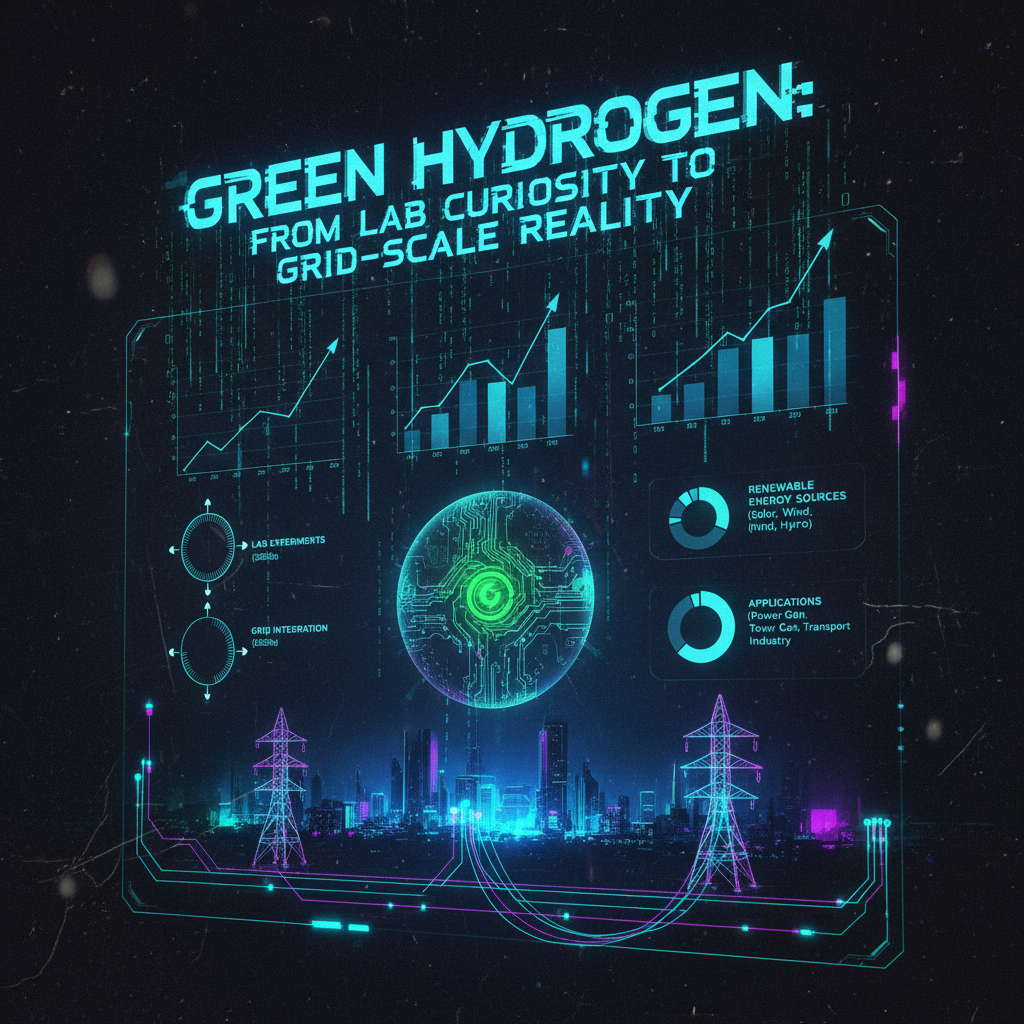
The Spark of a Revolution: From Alchemist's Folly to Fuel of the Future
Imagine, if you will, a world where the exhaust pipe of a heavy-duty truck emits not a noxious cloud of particulate matter, but a benign puff of water vapor. A world where steel mills, those behemoths of industrial might, forge their metallic masterpieces without belching carbon into our already overburdened atmosphere. Sounds like a utopian fantasy, doesn't it? Perhaps the fever dream of an overly optimistic environmentalist after a particularly potent kombucha. Yet, this isn't some far-flung sci-fi scenario; it's the very tangible, rapidly approaching reality being ushered in by a molecule as humble as it is powerful: hydrogen. Specifically, green hydrogen. For decades, hydrogen has been the perpetual bridesmaid of the energy transition, always promising, rarely delivering on its grand potential. It was the lab curiosity, the theoretical darling, the 'alternative medicine' of the energy sector – often discussed, rarely prescribed for mainstream ailments. But now, dear reader, something has shifted. The global energy landscape, much like a teenager finally deciding to clean their room, is undergoing a dramatic, if somewhat messy, transformation. And at the heart of this metamorphosis, hydrogen, once dismissed as an alchemist's folly, is not just knocking on the door; it's practically kicking it down, ready to claim its rightful place as a cornerstone of our grid-scale future. The question is no longer if it will happen, but how fast and how profitably. This isn't just about clean air; it's about a multi-trillion-dollar recalibration of global industry, and the investment opportunities are as vast as the ocean it seeks to decarbonize.
The Grand Stage: Why Hydrogen's Time is Now
We find ourselves at a fascinating, if precarious, juncture in human history. The climate clock is ticking louder than a grandfather clock in a silent library, and the global economy, much like a supertanker, is proving notoriously difficult to turn. Decarbonization, once a niche topic for environmental conferences, has become the defining economic imperative of our era. While renewable electricity – solar and wind – has made astounding progress in cleaning up our power grids, it's only half the battle. Think of it as patching a leaky roof while the basement is still flooding. Roughly 80% of global energy consumption still relies on fossil fuels, and a significant chunk of that isn't easily electrified. We're talking about the heavy hitters: steel production, cement manufacturing, long-haul shipping, aviation, and high-temperature industrial processes. These are the 'hard-to-abate' sectors, the industrial leviathans that chew through energy like a teenager through a pizza, and for whom a simple battery swap just won't cut it. This is where hydrogen, particularly its verdant variant, steps onto the stage, not as a bit player, but as a potential leading man. It offers a clean, versatile energy carrier that can be stored, transported, and used in ways electricity simply cannot. It's the Swiss Army knife of decarbonization, capable of tackling the toughest emissions challenges that batteries and direct electrification leave untouched. The geopolitical landscape, too, is adding fuel to this hydrogen fire. Energy independence, supply chain resilience, and the desire to escape the volatile whims of fossil fuel markets are driving nations to invest unprecedented sums in developing domestic, clean energy alternatives. This isn't just an environmental play; it's a strategic imperative, a new energy arms race where the prize is not just a cleaner planet, but also economic dominance and national security. The stage is set, the stakes are high, and hydrogen is finally ready for its close-up.
Key Takeaway: The stage is set, the stakes are high, and hydrogen is finally ready for its close-up.
The Alchemist's Secret: Demystifying Green Hydrogen Technology
At its core, green hydrogen production is elegantly simple, almost deceptively so. It's essentially water, electricity, and a dash of scientific wizardry. The process is called electrolysis, a term that sounds like something out of a Frankenstein movie, but is in fact a well-understood chemical reaction. You take water (H₂O), pass an electric current through it, and voilà – it splits into its constituent elements: hydrogen (H₂) and oxygen (O₂). The 'green' prefix is crucial here, denoting that the electricity used for this splitting act comes from renewable sources like solar, wind, or hydro power. No fossil fuels burned, no carbon emitted. Just pure, unadulterated hydrogen, and a bit of oxygen as a useful byproduct. Think of it as a molecular divorce, amicably mediated by clean electrons.
Now, while the principle is simple, the engineering behind it is a marvel of modern innovation. The heart of the operation is the electrolyzer, which comes in a few distinct flavors, each with its own quirks and charms. The most mature and widely used are Alkaline Electrolyzers. These are the workhorses, robust and relatively inexpensive, using a liquid alkaline electrolyte (like potassium hydroxide) and porous diaphragms to separate the gases. They're like the sturdy, reliable pickup truck of the electrolyzer world – a bit slow to respond to fluctuating power inputs, but dependable. Then we have Proton Exchange Membrane (PEM) Electrolyzers. These are the sports cars – sleek, compact, and incredibly responsive. They use a solid polymer membrane as the electrolyte, allowing for higher current densities and faster start-up times, making them ideal for pairing with intermittent renewables like solar and wind. However, they're a bit pricier and require noble metal catalysts (like platinum and iridium), which adds to their cost and supply chain complexity. Finally, the up-and-coming contender is Solid Oxide Electrolyzers (SOEC). These are the futuristic hyperloop trains of the group. They operate at much higher temperatures (700-800°C), which makes them incredibly efficient, especially when waste heat is available from industrial processes or nuclear plants. The high temperature also means they can use cheaper, non-noble metal catalysts. Their downside? High operating temperatures mean more complex materials and slower start-up times, but their efficiency gains are truly compelling. Beyond the electrolyzer itself, the entire ecosystem is being refined. We're talking about advanced materials for electrodes that reduce reliance on precious metals, intelligent control systems that optimize hydrogen production based on renewable energy availability, and innovative storage solutions – from high-pressure tanks to liquid hydrogen, and even converting it into ammonia for easier transport. The goal is to drive down the 'levelized cost of hydrogen' (LCOH), making it competitive with its 'grey' (fossil-fuel derived) counterpart. This isn't just about making a better mousetrap; it's about building an entirely new, carbon-free energy infrastructure, brick by molecular brick. The technology is no longer a lab curiosity; it's scaling up, getting cheaper, and becoming frighteningly efficient. The alchemists of old sought to turn lead into gold; today's engineers are turning water into a clean energy goldmine.
Market Implications: The Tectonic Shift Beneath Our Feet
The advent of grid-scale green hydrogen isn't merely an incremental improvement; it's a tectonic shift, a fundamental reordering of global energy markets and industrial supply chains. The implications for investors, economies, and geopolitical power dynamics are nothing short of profound. First, let's talk about energy independence. Nations currently beholden to volatile fossil fuel markets can now envision a future where their energy security is derived from abundant domestic renewables and water. This dramatically alters trade balances, reduces exposure to geopolitical risks, and fosters localized economic growth. Imagine a desert nation, rich in solar potential, becoming a global energy exporter, not of oil, but of green hydrogen. The implications for regional stability and wealth distribution are staggering.
Second, the decarbonization of heavy industry is no longer a pipe dream. Steel, cement, chemicals, and fertilizers – sectors notoriously difficult to decarbonize – now have a viable pathway. This means a massive overhaul of existing industrial infrastructure, creating enormous demand for new equipment, engineering services, and, of course, green hydrogen itself. Companies that can pivot swiftly to green hydrogen-based processes will gain a significant competitive advantage, while those clinging to carbon-intensive methods risk becoming stranded assets in a rapidly evolving regulatory and consumer landscape. Carbon taxes and stricter emissions standards will only accelerate this transition, making green hydrogen not just an environmental choice, but an economic imperative.
Third, the transportation sector is set for a revolution beyond just electric cars. While batteries are excellent for light-duty vehicles, they struggle with the energy density required for long-haul trucking, shipping, and aviation. Green hydrogen, either directly in fuel cells or as a feedstock for synthetic fuels (e-fuels), offers a compelling solution. This opens up new markets for hydrogen infrastructure – refueling stations, storage, and specialized vehicles – creating a cascade of investment opportunities across the logistics and automotive industries. Shipping giants, airlines, and even railway operators are already exploring and investing in hydrogen-powered solutions, signaling a clear shift away from traditional fuels.
Finally, consider the creation of entirely new markets and industries. We're not just replacing fossil fuels; we're building a new energy ecosystem from the ground up. This includes everything from gigafactories for electrolyzers to massive renewable energy projects dedicated solely to hydrogen production, and the development of sophisticated hydrogen pipeline networks. This will spur innovation, create millions of new jobs, and attract colossal capital investments. The market for green hydrogen itself is projected to reach hundreds of billions, if not trillions, of dollars annually within the next few decades. This isn't just a niche 'alternative medicine' market; it's a mainstream economic juggernaut in the making, promising a fundamental reshaping of global commerce and investment strategies. The smart money isn't just watching; it's already positioning itself for this monumental shift.
Key Takeaway: The smart money isn't just watching; it's already positioning itself for this monumental shift.
The Vanguard: Who's Leading the Hydrogen Charge?
In any nascent, transformative industry, identifying the key players is like trying to pick out the future titans from a crowd of enthusiastic start-ups. Yet, the green hydrogen landscape is beginning to reveal its champions, the companies and consortia that are not just talking the talk, but building the infrastructure, innovating the technology, and securing the off-take agreements that will define this new energy era. These aren't just energy companies; they're a diverse mix of industrial giants, specialized tech firms, and nimble innovators.
On the electrolyzer manufacturing front, a few names stand out. Plug Power (NASDAQ: PLUG) has been a long-time player in fuel cells and is now aggressively expanding its electrolyzer manufacturing capabilities, aiming for gigawatt-scale production. They're making a bold bet on vertical integration, from hydrogen production to delivery. Nel ASA (OSE: NEL) from Norway is another pure-play electrolyzer specialist, with a strong track record and a global footprint, particularly in alkaline and PEM technologies. Germany's Siemens Energy (ETR: ENR) is leveraging its vast industrial expertise to develop and scale advanced electrolyzer solutions, often partnering on large-scale projects. And then there's ITM Power (LSE: ITM), a UK-based PEM electrolyzer manufacturer, known for its modular and scalable systems. These companies are the picks and shovels providers in the green hydrogen gold rush, essential for the industry's expansion.
Beyond the hardware, industrial gas giants are pivoting aggressively. Air Products & Chemicals (NYSE: APD), a behemoth in industrial gases, is pouring billions into green hydrogen projects globally, leveraging its existing infrastructure for hydrogen production, liquefaction, and distribution. They understand the logistics of handling hydrogen better than almost anyone. Similarly, Linde plc (NYSE: LIN), another industrial gas powerhouse, is heavily invested in developing the entire hydrogen value chain, from production to storage and end-use applications. Their existing customer base in chemicals and refining makes them a natural fit.
Energy majors are also getting in on the action, albeit with varying degrees of enthusiasm. BP (NYSE: BP), Shell (NYSE: SHEL), and TotalEnergies (NYSE: TTE) are all investing in green hydrogen projects, often alongside their renewable energy ventures, seeing it as a critical component of their decarbonization strategies and a hedge against declining fossil fuel demand. They bring massive capital, project management expertise, and global reach. Ørsted (CPH: ORSTED), the Danish offshore wind giant, is particularly active, recognizing the synergy between abundant offshore wind and green hydrogen production.
Finally, let's not forget the automotive and heavy transport sectors. Companies like Hyundai (KRX: 005380) and Toyota (NYSE: TM) have been pioneers in fuel cell electric vehicles (FCEVs) for years, and are now pushing for hydrogen adoption in commercial vehicles. Start-ups like Nikola (NASDAQ: NKLA) (despite its past controversies) are still trying to carve out a niche in hydrogen trucking. And in aviation, Airbus (EPA: AIR) is aggressively pursuing hydrogen-powered aircraft, signaling a potential paradigm shift for long-haul travel. The ecosystem is vast, dynamic, and rapidly evolving, with new players emerging and established giants recalibrating their strategies almost daily. This isn't just a race; it's a global marathon with many contenders, and the finish line is a carbon-neutral future.
The Gauntlet: Challenges, Risks, and the Road Ahead
While the promise of green hydrogen sparkles like a freshly polished diamond, the path to grid-scale reality is not without its formidable challenges and inherent risks. This isn't a frictionless journey; it's a climb up a very steep, sometimes slippery, mountain. Ignoring these obstacles would be akin to buying a luxury car without checking if it runs on gasoline or unicorn tears.
Firstly, there's the cost conundrum. Currently, green hydrogen is significantly more expensive than its 'grey' counterpart, which is produced from natural gas with associated carbon emissions. This 'green premium' is the primary barrier to widespread adoption. While electrolyzer costs are falling rapidly, and renewable electricity prices continue their downward trend, achieving cost parity remains a critical hurdle. Government subsidies, carbon pricing mechanisms, and long-term off-take agreements are essential to bridge this gap in the interim. Without them, many projects struggle to achieve financial viability.
Secondly, infrastructure development is a monumental undertaking. We're talking about building an entirely new energy supply chain. Hydrogen is notoriously difficult to store and transport efficiently. It's a tiny molecule, prone to leakage, and requires extreme pressures or cryogenic temperatures for liquefaction. Building new pipelines, developing robust storage solutions (underground caverns, specialized tanks), and establishing a global network of refueling and distribution hubs will require colossal investments and coordinated international efforts. The 'chicken and egg' problem is real: who builds the infrastructure if there aren't enough hydrogen consumers, and who buys hydrogen vehicles if there's no infrastructure?
Thirdly, safety concerns linger in the public consciousness. Hydrogen, while not inherently more dangerous than other fuels like natural gas or gasoline, has a reputation problem, partly due to the Hindenburg disaster (which, incidentally, was more about flammable fabric than hydrogen itself). Education, stringent safety standards, and robust regulatory frameworks are crucial to ensure public acceptance and prevent accidents. The industry must demonstrate that hydrogen can be handled, stored, and used safely at scale.
Fourth, regulatory uncertainty and policy fragmentation pose significant risks. While many governments are touting hydrogen strategies, the specifics of incentives, carbon accounting, and international trade regulations are still evolving. This creates an unpredictable investment environment, making it difficult for companies to commit to multi-billion-dollar projects. A harmonized global approach to hydrogen standards and certification would greatly accelerate adoption.
Finally, the environmental footprint of the supply chain itself needs careful scrutiny. While green hydrogen production is carbon-free, the manufacturing of electrolyzers, the mining of critical minerals (for PEM catalysts, for instance), and the construction of massive renewable energy farms all have environmental impacts. A truly sustainable hydrogen economy requires a holistic life-cycle assessment and a commitment to circular economy principles. These challenges are not insurmountable, but they demand concerted effort, significant capital, and unwavering political will. The road ahead is bumpy, but the destination – a decarbonized global economy – is a prize worth every ounce of effort.
Key Takeaway: The road ahead is bumpy, but the destination – a decarbonized global economy – is a prize worth every ounce of effort.
The Investment Angle: Riding the Green Wave to Riches
For the discerning investor, green hydrogen is not just an environmental imperative; it's a multi-decade investment thesis ripe with opportunity, akin to the early days of the internet or renewable energy. This isn't about chasing fads; it's about positioning portfolios for a fundamental shift in global energy and industrial paradigms. Think of it as investing in the railroads during the industrial revolution, or computing during the digital age. The question isn't if the world will decarbonize, but how, and green hydrogen is emerging as a critical 'how'.
So, where does one begin to deploy capital in this burgeoning sector? Let's break it down into several key areas:
-
Electrolyzer Manufacturers: These are the 'picks and shovels' of the hydrogen gold rush. Companies like Nel ASA, Plug Power, ITM Power, and McPhy Energy (EPA: MCPHY) are at the forefront of producing the core technology. As demand for green hydrogen scales, so too will the demand for their equipment. Look for firms with strong R&D, scalable manufacturing capabilities, and diverse technology offerings (Alkaline, PEM, SOEC) to hedge bets.
-
Industrial Gas Companies: These established giants are leveraging their existing infrastructure, expertise in gas handling, and customer relationships to become major players in green hydrogen production, distribution, and storage. Air Products & Chemicals and Linde plc are prime examples. They offer a more stable, less volatile entry point into the hydrogen economy, benefiting from existing revenue streams while expanding into new green ventures.
-
Renewable Energy Developers & Utilities: Green hydrogen requires vast amounts of cheap, clean electricity. Companies that develop and operate large-scale solar, wind, and hydro projects are direct beneficiaries. Many are integrating hydrogen production directly into their project pipelines. Ørsted, NextEra Energy (NYSE: NEE), and various European utilities are actively pursuing this synergy. Investing in these companies offers exposure to both the renewable energy boom and the hydrogen revolution.
-
Hydrogen Infrastructure & Logistics: This includes companies involved in hydrogen storage (e.g., specialized tanks, underground caverns), transportation (pipelines, specialized shipping), and refueling stations. This is a longer-term play, as infrastructure build-out will take time, but the eventual market will be enormous. While pure-play infrastructure companies are still emerging, some industrial gas firms and engineering giants are already active here.
-
End-Use Applications & Fuel Cell Technology: Companies developing and manufacturing fuel cells for vehicles (heavy-duty trucks, buses, trains, ships), industrial applications, and stationary power generation. Ballard Power Systems (NASDAQ: BLDP) is a well-known name in fuel cell technology. Also, look at industrial players pivoting to hydrogen-based processes, such as steelmakers exploring green steel production. The automotive sector, particularly commercial vehicle manufacturers, will also be a key area.
-
Materials & Components: The specialized materials required for electrolyzers (e.g., catalysts, membranes) and fuel cells present opportunities for niche suppliers. This is a higher-risk, higher-reward area, often involving smaller, specialized technology firms.
Investors should adopt a diversified approach, spreading capital across these segments. Due diligence is paramount, focusing on companies with robust balance sheets, clear strategic roadmaps, strong partnerships, and a demonstrable path to profitability. This isn't a sprint; it's a marathon, and the patient, well-informed investor stands to reap significant rewards as green hydrogen transitions from a promising alternative to a grid-scale reality, powering the next industrial revolution.
The Horizon: Where Green Hydrogen is Headed (2-5 Years and Beyond)
Peering into the crystal ball of green hydrogen's future reveals a landscape of accelerating change, strategic realignments, and a growing inevitability. The next 2-5 years will be critical, laying the groundwork for a truly transformative decade. We're moving beyond pilot projects and into the era of gigawatt-scale deployments, where the 'alternative medicine' becomes the mainstream prescription.
In the immediate term (2-5 years), expect to see a dramatic increase in electrolyzer manufacturing capacity. Gigafactories, mirroring those built for batteries, will come online, driving down costs through economies of scale and automation. This will be coupled with continued innovation in materials science, reducing reliance on expensive noble metals and boosting efficiency. The 'green premium' will shrink considerably, making hydrogen competitive with grey hydrogen in an increasing number of applications, especially in regions with abundant, cheap renewable electricity and strong carbon pricing.
Policy and regulatory frameworks will mature significantly. Governments, having recognized the strategic importance of green hydrogen, will move beyond aspirational targets to implement concrete support mechanisms: production tax credits, carbon contracts for difference, and clear mandates for hydrogen use in specific industrial sectors. International cooperation will also deepen, leading to the establishment of global hydrogen trade routes, much like today's LNG markets. We'll see the first dedicated hydrogen pipelines and shipping routes emerge, connecting production hubs with demand centers.
Industrial decarbonization will accelerate. Steel, ammonia, and chemical production will begin to transition in earnest, with major industrial players announcing and commencing construction on large-scale green hydrogen-fed facilities. The first 'green steel' plants will move from demonstration to commercial operation, signaling a new era for heavy industry. In the transportation sector, hydrogen fuel cell trucks and buses will become a more common sight, particularly in regional logistics and urban public transport, driven by fleet operators seeking to meet emissions targets and reduce operational costs.
Looking further out (5-10 years and beyond), green hydrogen will solidify its position as a cornerstone of the global energy system. We'll see vast 'hydrogen valleys' emerge, integrated energy ecosystems where renewable power, hydrogen production, storage, and diverse end-uses (industrial, transport, power generation) are all interconnected. Hydrogen will play a crucial role in grid balancing, acting as a massive energy storage medium, converting surplus renewable electricity into storable hydrogen and then back into power when needed. This will solve the intermittency challenge of renewables, making 100% renewable grids a tangible reality.
Aviation and shipping will begin their serious transition. The first hydrogen-powered commercial flights and long-haul ships will be in operation, utilizing either direct hydrogen combustion or synthetic e-fuels derived from green hydrogen. This will open up entirely new markets and drive further technological breakthroughs. Ultimately, green hydrogen will not just be an 'alternative medicine' for our energy woes; it will be a fundamental pillar of a sustainable, resilient, and decarbonized global economy, powering everything from our heaviest industries to our furthest journeys. The future, it seems, will be fueled by water, sunshine, and a healthy dose of human ingenuity. And for investors, the opportunity to participate in this grand transformation is as clear as the water vapor from a hydrogen-powered exhaust pipe.


Conclusion: The Investment Playbook
The Winner: Plug Power (PLUG) – Powering the Green Revolution, One Forklift at a Time (and Beyond)
Our deep dive into "Green Hydrogen: From Lab Curiosity to Grid-Scale Reality" reveals a clear winner poised to capitalize on this monumental shift: Plug Power (PLUG). While their name might evoke images of mundane power outlets, PLUG is anything but. This Latham, New York-based company, currently boasting a market capitalization of approximately $10 billion (though highly volatile, as is the nature of growth stocks in nascent industries), is a first-mover and a dominant force in the hydrogen fuel cell and electrolyzer space. They aren't just dabbling; they're building an integrated green hydrogen ecosystem from production to end-use.
Why do they benefit? PLUG's competitive advantage lies in its comprehensive vertical integration and established customer base. They're not just selling fuel cells; they're developing a network of green hydrogen production plants (targeting 500 tons per day by 2025), delivering hydrogen, and providing the fuel cell systems themselves. Their GenDrive fuel cells are already powering over 60,000 material handling vehicles for giants like Amazon and Walmart – a critical, often overlooked, industrial segment. This existing infrastructure and proven track record give them a significant head start. As green hydrogen moves from lab curiosity to grid-scale reality, PLUG's electrolyzer technology (ProGen) will be crucial for scalable, cost-effective production, and their established distribution network positions them perfectly to meet burgeoning demand across various sectors, from logistics to heavy-duty transport.
Our investment thesis for PLUG is simple: they are a pure-play bet on the green hydrogen economy. As global decarbonization efforts intensify and green hydrogen costs continue to fall, PLUG's integrated model offers a compelling growth story. They are transitioning from a niche material handling provider to a foundational player in the broader energy transition. Investors should consider PLUG for its early-mover advantage, technological leadership in electrolyzers, and aggressive expansion plans in green hydrogen production. It's a high-conviction play on a transformative energy source.
However, risks are substantial. PLUG operates in a capital-intensive industry, requiring significant investment in infrastructure. Profitability remains elusive, and their valuation is largely predicated on future growth. Competition is intensifying, and the pace of green hydrogen adoption could be slower than anticipated due to regulatory hurdles or infrastructure challenges. Furthermore, the stock is notoriously volatile, susceptible to market sentiment shifts and commodity price fluctuations. Dilution from future capital raises is also a perennial concern. Investors must have a high tolerance for risk and a long-term horizon, understanding that this is a speculative, albeit potentially rewarding, bet on the future of energy.
The Loser: ExxonMobil (XOM) – The Titanic of Hydrocarbons, Steaming Towards an Iceberg of Green Hydrogen?
While the green hydrogen revolution promises a cleaner future, it casts a long, ominous shadow over the titans of the fossil fuel industry. Our prime candidate for being negatively affected is ExxonMobil (XOM). With a colossal market capitalization hovering around $450 billion, XOM is a quintessential oil and gas supermajor, deeply entrenched in the extraction, refining, and distribution of hydrocarbons. Their business model, built on centuries of fossil fuel dominance, is directly threatened by the disruptive potential of green hydrogen.
Why are they threatened? XOM's vulnerability stems from its overwhelming reliance on oil and natural gas, which are the very energy sources green hydrogen aims to displace. As green hydrogen becomes economically viable and scalable, it will increasingly compete with natural gas in industrial processes, power generation, and potentially even heating. While XOM has made some token gestures towards carbon capture and
Parting Thoughts
May your portfolios be as green as the energy we just discussed. Until next time, keep your stops tight and your research deep.
— The Vetta Research Team
Enjoyed this deep dive? Don't miss our next research report. Subscribe to Vetta Research & Reports [blocked] for exclusive long-form analysis on the technologies and trends reshaping investment landscapes. We publish in-depth research that goes beyond the headlines—because your portfolio deserves better than surface-level takes.
Browse More Research & Reports → [blocked]
Related Articles
The Silicon Alchemists: Forging Tomorrow's Brains from Bits
Monday, March 16, 2026 | Vetta Investments — News & Insights --- The air on Wall Street, usually thick with the scent of ambition and artisanal coffee, now carries a faint, almost imperceptible hum. It's the sound of servers whirring, of data flowing, of algorithms thinking. We're not just trading...
The Digital Fortress: Building Walls in the Age of AI and Cyber Shadows
Monday, March 16, 2026 | Vetta Investments — News & Insights --- The digital world, for all its boundless promise, has always been a bit like the Wild West: vast, untamed, and rife with both opportunity and peril. Today, however, the landscape is less about dusty trails and more about...
Chips, Rates, and the Algorithm's New Compass
Sunday, March 15, 2026 | Vetta Investments — News & Insights --- The market, much like a seasoned poker player, rarely shows its full hand. One moment, it's all about the high-flying growth stocks, fueled by cheap money and boundless optimism. The next, the dealer reshuffles, interest rates climb, and...
Comments (0)
Share your thoughts and join the discussion. All comments are moderated.
No comments yet. Be the first to share your thoughts!
Get More Insights Like This
Subscribe to The Long & Short of It and receive market analysis, emerging technology insights, and investment opportunities every Tuesday, Thursday, and Saturday.
Free newsletter. Unsubscribe anytime. We respect your privacy.