Fungus Among Us: Unearthing Mycotherapy's Neuro-Regenerative Goldmine for Savvy Investors
Abstract
Dive deep into the burgeoning world of mycotherapy and its profound neuro-regenerative potential. This report, penned by Vetta Investments' senior research analyst, explores how humble fungi like Lion's Mane and Reishi are poised to revolutionize brain health and cognitive enhancement. Discover the science behind hericenones and erinacines, the market implications for a rapidly aging global population, and the investment opportunities spanning biotech, nutraceuticals, and functional foods. We navigate the challenges of regulation and standardization while highlighting key players and future outlooks. This isn't just about 'magic mushrooms'; it's about unlocking nature's sophisticated neuro-architects for unprecedented cognitive gains. Prepare for a witty, educational journey into the mycelial network that could reshape our understanding of brain longevity and offer lucrative returns for astute investors.
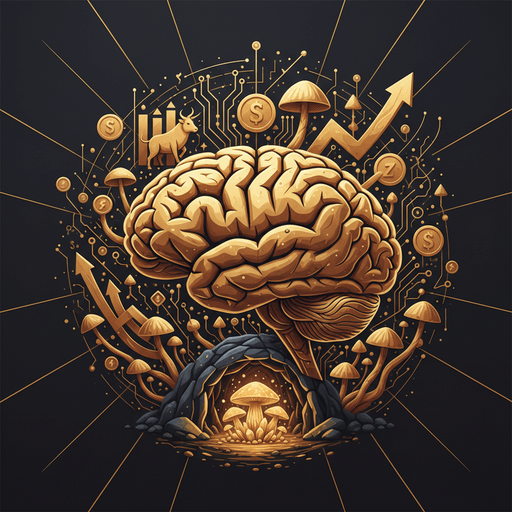
Opening Hook: The Brain's Mycelial Makeover
Imagine a future where the secret to a sharper mind, robust memory, and even a defense against neurodegenerative ravages isn't found in a gleaming pharmaceutical lab, but quietly cultivated in the dark, damp corners of the earth. We're talking about fungi, those unassuming decomposers often relegated to pizza toppings or forest floor curiosities. Yet, these humble organisms are now whispering promises of neuro-regeneration, a concept once confined to science fiction.
For centuries, traditional medicine has hinted at the brain-boosting prowess of certain mushrooms. Now, modern science, armed with advanced analytical tools and a healthy dose of curiosity, is finally catching up, dissecting these fungal compounds to reveal their astonishing potential. The question isn't if they work, but how spectacularly, and more importantly, who will profit from this mycological renaissance?
The Landscape: Where Mycology Meets Mind-Bending Opportunity
We stand at the precipice of a paradigm shift in brain health. The global burden of neurological disorders is staggering, with conditions like Alzheimer's and Parkinson's projected to affect over 150 million people by 2050. Current pharmaceutical interventions often manage symptoms rather than addressing underlying neurodegeneration, leaving a gaping chasm in effective treatments.
Enter mycotherapy, the therapeutic use of fungi. This isn't just about 'magic mushrooms' for psychedelic trips, though those compounds have their own compelling neuroplasticity story. We're focusing on the non-psychoactive powerhouses: Lion's Mane, Reishi, Cordyceps, and a growing roster of fungal luminaries whose bioactive compounds are showing remarkable promise in preclinical and early clinical studies.
The confluence of an aging global population, increasing awareness of cognitive decline, and a growing appetite for natural, holistic health solutions has created a perfect storm. The market for brain health supplements alone is projected to reach $15.2 billion by 2027, and fungal-derived neuroceuticals are poised to carve out a significant, perhaps dominant, slice of that pie. This isn't a niche; it's a burgeoning ecosystem.
The Technology Deep Dive: Unpacking Fungal Neuro-Architects
At the heart of mycotherapy's neuro-regenerative potential lie complex bioactive compounds, each a tiny architect of neural repair and enhancement. Think of them as miniature biological engineers, capable of stimulating nerve growth factors, reducing inflammation, and bolstering antioxidant defenses within the brain. It's a symphony of molecular action, far more nuanced than a simple pill.
Take Hericium erinaceus, better known as Lion's Mane mushroom. Its star compounds, hericenones and erinacines, are particularly fascinating. These diterpenoids have demonstrated the ability to cross the blood-brain barrier and stimulate the synthesis of Nerve Growth Factor (NGF), a crucial protein for the growth, maintenance, and survival of neurons. This isn't just about preventing decline; it's about actively rebuilding.
Beyond NGF, other fungal compounds offer a diverse toolkit. Polysaccharides like beta-glucans, abundant in species like Reishi (Ganoderma lucidum), act as potent immunomodulators and antioxidants, protecting neural tissue from oxidative stress and chronic inflammation – two major culprits in neurodegeneration. Triterpenes, also found in Reishi, exhibit neuroprotective properties and can even inhibit acetylcholinesterase, an enzyme that breaks down acetylcholine, a neurotransmitter vital for learning and memory.
The Mycelial Network: A Biological Superhighway
Understanding fungi means understanding their intricate mycelial networks, the vast, root-like structures that underpin their visible fruiting bodies. These networks are nature's ultimate recyclers and chemical factories, constantly synthesizing novel compounds in response to their environment. This inherent biological complexity makes them a treasure trove for drug discovery, far surpassing the synthetic limitations of traditional chemistry.
The extraction and isolation of these compounds are becoming increasingly sophisticated. Modern techniques, from supercritical fluid extraction to advanced chromatography, allow for the precise harvesting of specific neuroactive molecules, ensuring purity and potency. This scientific rigor is transforming 'folk medicine' into evidence-based neuroceutical innovation, moving beyond anecdotal evidence to quantifiable biological effects.
Key Takeaway: Fungal compounds like hericenones and erinacines are not merely supplements; they are potent biological agents capable of stimulating crucial neurotrophic factors and protecting brain health at a cellular level.
Market Implications: A Cognitive Gold Rush for the Astute
The implications for investors are nothing short of transformative. This isn't a fleeting wellness trend; it's a fundamental shift in how we approach brain health, moving from reactive symptom management to proactive neuro-enhancement and regeneration. The market opportunity spans pharmaceuticals, nutraceuticals, functional foods, and even biotechnology platforms focused on fungal cultivation and compound synthesis.
Consider the sheer scale. The global pharmaceutical market for Alzheimer's disease alone is projected to reach $14.8 billion by 2030, yet current treatments offer only modest benefits. If mycotherapy can deliver genuine neuro-regenerative outcomes, the market capture potential is immense. We're talking about a paradigm where fungal extracts could become foundational therapies, not just adjunctive ones.
Moreover, the 'healthy aging' demographic is a powerful economic force. As life expectancies increase, so does the demand for interventions that maintain cognitive vitality. Consumers are increasingly willing to invest in products that promise to keep their minds sharp, viewing cognitive health as an essential component of overall well-being. This creates a robust and expanding consumer base for fungal-derived neuroceuticals.
The Nutraceutical and Functional Food Frontier
The most immediate market impact is likely to be felt in the nutraceutical and functional food sectors. Companies incorporating mushroom extracts into coffees, teas, snack bars, and dietary supplements are already experiencing rapid growth. This 'stealth health' approach allows consumers to integrate brain-boosting compounds seamlessly into their daily routines, driving widespread adoption.
| Product Category | Current Market Size (2023 Est.) | Projected Growth (CAGR 2023-2030) | Key Fungal Compounds | Target Consumers |
|---|---|---|---|---|
| Dietary Supplements | $6.5 Billion | 12.8% | Lion's Mane, Reishi, Cordyceps | Healthy Aging, Biohackers |
| Functional Foods & Beverages | $4.2 Billion | 10.5% | Chaga, Shiitake, Maitake | Mainstream Wellness |
| Pharmaceutical R&D | $1.8 Billion | 18.1% | Isolated Erinacines, Hericenones | Clinical Patients |
The pharmaceutical angle, while longer-term, holds the promise of blockbuster drugs derived from fungal compounds. Imagine a future where a prescription drug, synthesized or extracted from a specific mushroom, becomes the go-to treatment for early-stage dementia. The intellectual property and market exclusivity for such a breakthrough would be astronomically valuable, reshaping the competitive landscape.
The Players: Cultivating Innovation in the Fungal Frontier
The ecosystem of mycotherapy innovation is a vibrant mix of established nutraceutical giants, nimble biotech startups, and pioneering academic researchers. It's a race to identify, isolate, and commercialize the most potent neuro-regenerative compounds, and the stakes are incredibly high. The early movers who secure robust intellectual property and scalable cultivation methods will likely dominate this nascent market.
Companies like Four Sigmatic have successfully popularized functional mushroom products, bringing Lion's Mane coffee and Reishi elixirs to the mainstream. While primarily a consumer brand, their success underscores the growing demand and acceptance of fungal compounds for health benefits. They've built a brand around accessibility and convenience, paving the way for more targeted, science-backed offerings.
On the biotech front, smaller, specialized firms are diving deep into the molecular biology. Nammex (North American Medicinal Mushroom Extracts) is a leader in high-quality, standardized mushroom extracts, emphasizing third-party testing and transparency. Their focus on the 'active ingredients' rather than just mushroom powder positions them as a critical supplier for both nutraceutical and potential pharmaceutical applications. Their commitment to verifiable beta-glucan content, for instance, sets a new industry standard.
Academic Powerhouses and Research Innovators
Academic institutions are also crucial players, often at the forefront of discovery. Researchers at the University of Queensland, for example, recently identified a novel compound from Lion's Mane that significantly boosted nerve growth and memory in preclinical models, providing robust scientific validation for traditional claims. These breakthroughs often form the basis for new patents and spin-off companies.
Furthermore, companies like MycoTechnology are exploring advanced fermentation techniques to produce fungal proteins and bioactive compounds more efficiently and sustainably. While their primary focus has been on food ingredients, their expertise in fungal cultivation and bioprocessing could easily pivot or expand into high-value neuroceuticals, offering scalable production solutions. The ability to cultivate these compounds in bioreactors, rather than relying solely on wild harvesting, is a critical step towards commercial viability and consistency.
Challenges & Risks: Navigating the Mycelial Maze
Despite the intoxicating promise, the path to widespread mycotherapy adoption is not without its fungal pitfalls. Regulatory hurdles, standardization challenges, and the ever-present specter of intellectual property disputes represent significant obstacles. This isn't a stroll through a sun-dappled forest; it's a trek through dense, sometimes thorny, undergrowth.
One of the primary challenges is regulatory clarity. In many jurisdictions, mushroom extracts fall into a grey area between dietary supplements and pharmaceuticals. This lack of clear classification can hinder large-scale clinical trials, limit health claims, and create uncertainty for investors. Navigating the FDA's GRAS (Generally Recognized As Safe) status for novel compounds, for instance, is a costly and time-consuming endeavor.
Standardization is another critical issue. The potency and purity of mushroom extracts can vary wildly depending on the species, cultivation method, extraction process, and even the part of the mushroom used (fruiting body vs. mycelium). Without rigorous standardization and quality control, ensuring consistent therapeutic effects and preventing adulteration remains a significant concern for both consumers and medical professionals. The industry needs a 'gold standard' for active compound measurement.
The IP Minefield and Public Perception
Protecting intellectual property in the natural products space is notoriously complex. While specific isolated compounds can be patented, the broad use of a mushroom species often cannot. This creates a 'free rider' problem where companies can benefit from research without contributing to its development. Securing patents on novel extraction methods, specific compound formulations, or unique cultivation techniques becomes paramount for competitive advantage.
Finally, public perception, while increasingly positive, still grapples with the 'mushroom' stigma. Overcoming associations with psychedelics or simply 'weird' health fads requires sustained educational efforts and robust scientific validation. Building trust through transparent research and clear communication will be crucial for mainstream acceptance and investor confidence. The industry must clearly differentiate between recreational and therapeutic applications, emphasizing the rigorous science behind neuro-regenerative mycotherapy.
The Investment Angle: Cultivating a Portfolio for Cognitive Gains
For the discerning investor, mycotherapy presents a multi-faceted opportunity, akin to planting seeds in fertile, albeit unconventional, ground. This isn't a monolithic sector; rather, it’s a diverse landscape requiring a nuanced approach, blending early-stage venture capital with strategic positions in more established players. Think of it as building a diversified fungal forest, not just a single mushroom farm.
One compelling avenue is biotech startups focused on isolating, synthesizing, and clinically testing novel fungal compounds. These are high-risk, high-reward plays, akin to early-stage pharmaceutical investments. Look for companies with strong scientific teams, robust patent portfolios, and clear pathways to FDA (or equivalent) approval for specific neurological indications. A successful Phase II or Phase III trial could yield exponential returns.
Another strategy involves investing in nutraceutical companies that are leaders in the functional mushroom space. These firms often have established brands, distribution networks, and a loyal customer base. Their growth trajectory is typically more stable, driven by consumer demand for health and wellness products. Focus on those prioritizing quality, transparency, and scientific backing for their claims, as they are better positioned to withstand regulatory scrutiny and build long-term trust.
Supply Chain and Cultivation Innovators
Don't overlook the 'picks and shovels' of the mycotherapy gold rush: companies involved in advanced cultivation, extraction, and standardization technologies. Firms developing efficient bioreactor systems for fungal compound production, or those specializing in analytical testing and quality assurance, will be critical enablers for the entire industry. Their success is less dependent on a single drug's approval and more on the overall growth of the sector.
| Investment Type | Risk Profile | Potential Return | Key Focus Areas | Example Companies (Illustrative) |
|---|---|---|---|---|
| Biotech (Early-Stage) | High | Very High | Drug Discovery, Clinical Trials | MycoPharm Inc., NeuroFungi Labs |
| Nutraceuticals (Established) | Medium | Moderate-High | Brand Building, Market Share | Four Sigmatic, Real Mushrooms |
| Cultivation/Extraction Tech | Medium | Moderate | Bioreactors, Analytical Tools | MycoTech Solutions, BioExtracts |
| Research & Development Funds | Medium | High | IP Licensing, Academic Spin-offs | University Tech Transfer Funds |
Finally, consider specialized investment funds or ETFs (if they emerge) that specifically target the alternative medicine or brain health sectors with a mycotherapy component. These can offer diversified exposure without requiring deep individual company analysis. However, always scrutinize their holdings to ensure genuine alignment with the neuro-regenerative fungal thesis, rather than a broad 'wellness' basket.
Future Outlook: The Mycelial Metropolis of Tomorrow
The next 2-5 years will be pivotal for mycotherapy's neuro-regenerative potential, transforming it from a promising niche into a mainstream medical and wellness frontier. We anticipate significant advancements in clinical research, regulatory frameworks, and consumer acceptance, laying the groundwork for a future where fungal compounds are as common in our medicine cabinets as multivitamins.
Expect to see an acceleration of preclinical research transitioning into human clinical trials, particularly for compounds like erinacines and hericenones, targeting specific neurodegenerative conditions. Positive Phase I and II results will be game-changers, attracting substantial pharmaceutical investment and potentially leading to fast-tracked drug development. The scientific community's growing embrace of natural compounds, coupled with advanced analytical techniques, will unlock new discoveries at an unprecedented pace.
Regulatory bodies, while cautious, will likely begin to establish clearer guidelines for fungal-derived neuroceuticals, recognizing their therapeutic potential. This could involve new classifications or expedited pathways for compounds demonstrating significant efficacy and safety. Such clarity would de-risk investment and accelerate market entry for novel treatments, fostering a more predictable environment for innovation.
Personalized Mycotherapy and Bio-Integration
Beyond 5 years, the vision expands to personalized mycotherapy, where an individual's genetic profile and cognitive needs dictate specific fungal compound formulations. Imagine AI-driven diagnostics recommending a bespoke blend of Lion's Mane, Reishi, and Cordyceps extracts, precisely tailored to optimize your unique brain chemistry. This level of personalization will elevate mycotherapy from general wellness to precision medicine.
Furthermore, expect to see the integration of fungal compounds into broader bio-enhancement strategies, potentially combined with neurofeedback, transcranial stimulation, or other cognitive training modalities. The mycelial network, a symbol of interconnectedness, will mirror the holistic approach to brain health, where fungi play a central role in a multi-pronged strategy for cognitive longevity and resilience. The future of brain health, it seems, is rooted in the earth, cultivated by science, and ripe for investment.
Key Takeaway: The future of mycotherapy involves a blend of rigorous clinical validation, regulatory evolution, and personalized approaches, positioning fungal compounds as foundational elements in the next generation of brain health solutions.
Conclusion: The Investment Playbook
Well, folks, after diving headfirst into the fascinating, and frankly, a little trippy, world of mycotherapy's neuro-regenerative potential, it's clear we're not just talking about magic mushrooms for a good time anymore. We're talking about serious science, serious health benefits, and for us at Vetta Investments, serious investment opportunities (and pitfalls!). The brain health market is a behemoth, and if fungi can truly offer novel pathways to cognitive enhancement and neuro-regeneration, then we're on the cusp of a paradigm shift. Forget your synthetics; nature's underground network might just hold the keys to a brighter, sharper future. But as with any emerging frontier, there will be victors and casualties.
The Winner: MindMed (MNMD) – Tripping Towards Trillions?
Our top pick, poised to ride this fungal wave to potentially stratospheric heights, is MindMed (MNMD). With a current market cap hovering around $150-200 million (highly volatile, mind you!), MindMed isn't just dabbling; they're diving deep into psychedelic-inspired medicines, including compounds derived from fungi, for brain health. While their primary focus has been on LSD and MDMA analogs, their robust research pipeline and strategic partnerships position them perfectly to pivot or expand into other neuro-regenerative fungal compounds as the science evolves. Their competitive advantage lies in their early-mover status in a heavily regulated, but increasingly accepted, therapeutic space. They've already navigated significant regulatory hurdles, established clinical trial infrastructure, and built a brand synonymous with responsible psychedelic medicine development. Their current market position is that of a clinical-stage biotech, burning cash but accumulating invaluable intellectual property and clinical data. Financially, they're pre-revenue but have raised substantial capital to fund their trials, including their lead candidate, MM-120 (LSD D-tartrate), for generalized anxiety disorder, which is showing promising Phase 2b results. The neuro-regenerative applications of these compounds, while not their current primary indication, are a natural extension of their research into neuroplasticity and brain function.
Investment Thesis: An investment in MNMD is a bet on the future of brain health, where fungi-derived compounds play a central role. Their existing infrastructure, scientific expertise, and regulatory experience in psychedelic medicine make them uniquely suited to capitalize on the broader mycotherapy trend. As public perception shifts and clinical data mounts for neuro-regenerative applications, MNMD could become a key player, potentially attracting partnerships or even acquisition by larger pharmaceutical firms looking to enter this space. This isn't just about treating mental illness; it's about optimizing brain function. Their current valuation, while speculative, offers significant upside if their pipeline delivers and the neuro-regenerative potential of these compounds is fully realized.
Risk Factors: This is a high-risk, high-reward play. Regulatory hurdles remain significant, clinical trials can fail, and public acceptance, while growing, is not universal. Dilution from future capital raises is a constant threat for pre-revenue biotechs. Competition from other biotech firms, both large and small, is also increasing. Furthermore, the specific neuro-regenerative potential of fungal compounds is still an emerging field, and MindMed would need to strategically adapt its pipeline to fully capture this opportunity.
The Loser: Eisai Co. Ltd. (ESALY) – Alzheimer's Albatross?
On the flip side, a company that could find itself increasingly vulnerable as mycotherapy gains traction in neuro-regeneration is Eisai Co. Ltd. (ESALY). This Japanese pharmaceutical giant, with a market cap around $18-20 billion, has made significant strides in Alzheimer's disease (AD) treatment, most notably with its recently approved drug, Leqembi (lecanemab), developed in partnership with Biogen. Leqembi targets amyloid plaques, a hallmark of AD, and represents a significant scientific achievement. However, its effectiveness is modest, typically slowing cognitive decline by only about 27% over 18 months, and it comes with substantial side effects, including ARIA (amyloid-related imaging abnormalities), requiring careful monitoring. Its annual price tag is also a hefty $26,500.
Why They're Threatened: The threat to Eisai isn't that Leqembi will be immediately replaced, but that the entire amyloid-centric paradigm for neuro-degeneration could be fundamentally challenged by the holistic, neuroplasticity-enhancing potential of fungal compounds. If mycotherapy can offer more profound, safer, and potentially more affordable neuro-regenerative effects – perhaps even preventing or reversing damage rather than just slowing decline – then Eisai's current blockbuster strategy could look increasingly outdated. Their vulnerability lies in their deep entrenchment in a specific, high-cost, and partially effective treatment pathway for AD, which is a disease with immense unmet needs. Their current market position is strong in the AD treatment space, but their exposure to the limitations of current AD therapies is also high. Their financials are solid, driven by a diversified portfolio, but Leqembi is a key growth driver.
Investment Thesis: Investors should be cautious with Eisai, particularly regarding the long-term sustainability of their AD pipeline. While Leqembi is a commercial success, it's a first-generation solution to a complex problem. As mycotherapy research progresses, demonstrating superior neuro-regenerative capabilities, the market could shift dramatically. Eisai's reliance on incremental improvements within an established, and arguably limited, scientific framework for AD could leave them playing catch-up. They are a large, slow-moving ship in a rapidly evolving sea of neuro-science.
Potential Catalysts for Decline: A significant catalyst for decline would be the publication of robust clinical data demonstrating superior neuro-regenerative outcomes from fungal compounds, particularly if they show efficacy across a broader spectrum of neuro-degenerative conditions, with fewer side effects and lower costs. Increased regulatory acceptance and public adoption of mycotherapy as a primary or adjunctive treatment for cognitive decline would also erode confidence in traditional, symptom-management approaches. Any major setback or safety concern with Leqembi, combined with positive news from the mycotherapy front, could accelerate this shift, making Eisai's current AD strategy appear less attractive to both patients and payers.
Parting Thoughts
The market rewards the prepared mind. Consider yours officially prepared. Now go make some informed decisions.
— The Vetta Research Team
Enjoyed this deep dive? Don't miss our next research report. Subscribe to Vetta Research & Reports [blocked] for exclusive long-form analysis on the technologies and trends reshaping investment landscapes. We publish in-depth research that goes beyond the headlines—because your portfolio deserves better than surface-level takes.
Browse More Research & Reports → [blocked]
Get More Insights Like This
Subscribe to The Long & Short of It and receive market analysis, emerging technology insights, and investment opportunities every Tuesday, Thursday, and Saturday.
Free newsletter. Unsubscribe anytime. We respect your privacy.